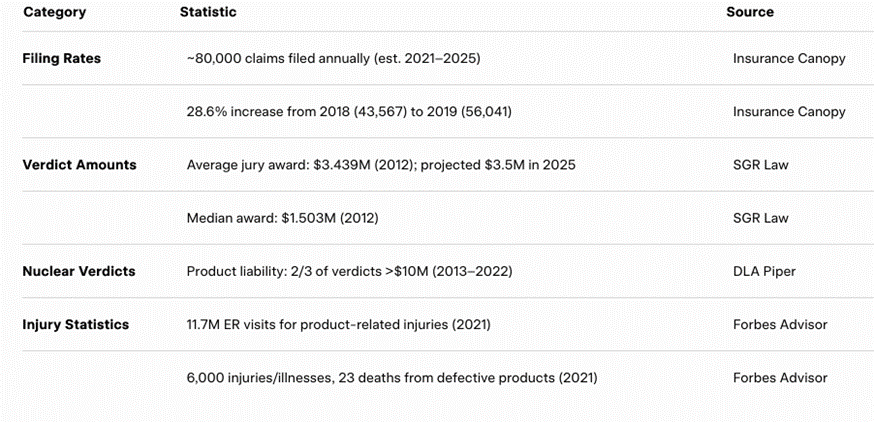
Each year, approximately 80,000 product liability claims are filed in U.S. courts, posing significant financial and reputational risks for corporate defendants, from small manufacturers to tech giants. In 2025, the product liability landscape is evolving rapidly, driven by massive punitive damage awards, novel litigation targeting digital products, heightened scrutiny of pharmaceuticals and food industries, and growing environmental liability cases. While high-profile verdicts like Ford Motor Co.’s $2.5 billion payout in Georgia grab headlines, corporate defendants can mitigate risks through strategic defenses, such as challenging causation, leveraging regulatory compliance, and appealing excessive awards. This article explores the latest trends in product liability law and provides actionable defense strategies to help corporations protect their interests in this high-stakes environment.
- Massive Punitive Damages: Mitigating Financial Exposure
Trend Overview
Product liability cases in 2025 are marked by substantial punitive damage awards. A Georgia federal jury’s $2.5 billion verdict against Ford Motor Co. for a defective truck roof that caused the deaths of Debra and Herman Mills exemplifies this trend, with an additional $30.5 million in compensatory damages. Similarly, Monsanto faced a $2.07 billion verdict in Georgia for Roundup’s (an herbicide) alleged carcinogenic risks, the largest single-plaintiff award in state history. These “nuclear verdicts,” exceeding $10 million, accounted for two-thirds of such awards from 2013 to 2022, per the U.S. Chamber of Commerce.
Defense Strategies
Corporate defendants can reduce exposure to such verdicts through proactive measures:
- Rigorous Safety Testing: Implement and document comprehensive safety protocols to demonstrate due diligence, countering claims of negligence or recklessness.
- Prompt Recalls: Address defects swiftly through recalls or safety updates to show responsibility and mitigate punitive damage risks.
- Appeals for Proportionality: Challenge excessive punitive awards on appeal, citing constitutional limits. For example, Philip Morris reduced a $28 billion verdict to $28 million.
- Comparative Negligence: Argue that the plaintiff’s actions contributed to the injury, reducing liability under comparative negligence rules.
Implications
These strategies can significantly lower financial exposure. By maintaining robust safety records and engaging experienced defense counsel, companies can challenge the proportionality of punitive damages and shift blame where appropriate, protecting both their bottom line and reputation.
- Digital Products and Mental Health: Navigating New Liability Frontiers
Trend Overview
Product liability law is expanding to include digital products, with lawsuits targeting social media platforms like Meta, TikTok, and YouTube for alleged mental health harms, particularly among adolescents. The multidistrict litigation (MDL) In re: Social Media Adolescent Addiction/Personal Injury Products Liability Litigation in California’s Northern District alleges that platform designs are addictive, causing anxiety and depression. Cases like Garcia v. Character Technologies, Inc. extend liability for adolescent harm to AI chatbots, applying traditional defect theories to digital technologies. Proposed California bill AB2 aims to increase penalties for social media negligence affecting minors, amplifying corporate risks.
Defense Strategies
Tech companies can counter these novel claims with targeted defenses:
- Product Definition: Argue that digital platforms are not “products” under traditional product liability law, which typically applies to tangible goods.
- Causation Challenges: Contest the link between platform use and mental health harms, emphasizing multifactorial causes like pre-existing conditions.
- Section 230 Immunity: Invoke Section 230 of the Communications Decency Act, which shields online platforms from liability for user-generated content.
- First Amendment Protections: Assert that platform features are protected speech, limiting liability for design choices.
Implications
These defenses can help tech companies navigate uncharted legal territory. By challenging the applicability of product liability law and leveraging statutory protections, firms can reduce exposure while advocating for clearer regulations in the digital space.
- Pharmaceutical and Medical Device Litigation: Strengthening Compliance Defenses
Trend Overview
Pharmaceutical and medical device litigation remains a focal point, with cases like the “GLP-1 receptor agonist” lawsuits against Novo Nordisk and Eli Lilly alleging inadequate warnings about side effects. The Depo-Provera litigation against Pfizer claims a contraceptive increases brain tumor risk, highlighting labeling disputes. These cases often hinge on complex causation arguments and regulatory compliance.
Defense Strategies
Pharmaceutical companies can bolster their defenses by:
- FDA Approval: Highlight rigorous FDA approval processes to argue that products were deemed safe and effective.
- Preemption: Assert that federal regulations preempt state law claims, particularly for FDA-approved labeling.
- Learned Intermediary Doctrine: Argue that warnings were provided to prescribing physicians, fulfilling the duty to warn.
- Expert Testimony Challenges: Contest plaintiff expert testimony under Daubert standards, where exclusions can lead to dismissals.
Implications
Robust regulatory compliance and strategic legal challenges can significantly reduce liability. By documenting adherence to FDA standards and scrutinizing plaintiff evidence, companies can strengthen their position in high-stakes litigation.
- Food Industry Accountability: Defending Against Health Claims
Trend Overview
The food industry faces growing liability for ultra-processed foods, with lawsuits against Kraft Heinz, PepsiCo, and others alleging health impacts like type 2 diabetes. These claims draw parallels to tobacco litigation, asserting that products are defectively designed or marketed.
Defense Strategies
Food companies can counter these claims by:
- Safe When Used as Intended: Argue that products are safe when consumed in moderation, emphasizing dietary guidelines.
- Personal Responsibility: Highlight consumer choice and multifactorial causes of health issues, reducing corporate liability.
- Regulatory Compliance: Demonstrate adherence to FDA and USDA standards to refute defect claims.
Implications
By emphasizing consumer responsibility and regulatory compliance, food companies can mitigate risks. Clear labeling and transparent marketing further strengthen defenses against health-related claims.
- Environmental and Chemical Exposure: Managing Long-Term Liabilities
Trend Overview
Environmental contamination cases, such as 3M’s $450 million PFAS settlement and Monsanto’s $100 million PCB verdict, highlight long-term liabilities for chemical exposure. Proposed laws in states like Iowa aim to shield pesticide manufacturers from failure-to-warn claims if labels are EPA-approved.
Defense Strategies
Companies can defend against these claims by:
- Regulatory Compliance: Prove adherence to environmental regulations at the time of production.
- Causation Challenges: Contest scientific evidence linking exposure to health outcomes, often requiring expert testimony.
- Statute of Limitations: Argue that claims are time-barred if exposure or discovery falls outside legal filing periods.
Implications
Proactive environmental stewardship and rigorous scientific defenses can limit liability. Companies should also monitor legislative changes that may offer protections, such as EPA-approved label exemptions.
- Technological Advancements and Product Safety: Proactive Risk Management
Trend Overview
Technological advancements increase scrutiny, as seen in Fitbit’s $12.25 million penalty for failing to report overheating smartwatches. This case underscores the need for prompt hazard reporting.
Defense Strategies
Tech companies can mitigate risks by:
- Timely Reporting: Comply with Consumer Product Safety Commission (CPSC) reporting requirements to avoid penalties.
- Safety Monitoring: Implement robust post-market surveillance to detect issues early.
- Non-Defective Product: Argue that the product was not defective or that risks were not foreseeable.
Implications
Proactive safety monitoring and compliance can prevent costly penalties and litigation, ensuring consumer trust and regulatory adherence.
- Regulatory Compliance and Penalties: Building Robust Defenses
Trend Overview
Regulatory compliance is critical, with agencies like the CPSC imposing significant penalties for violations. The 2024 Supreme Court decision overturning Chevron deference reduces agency interpretive authority, potentially benefiting defendants by requiring courts to independently assess regulations.
Defense Strategies
Companies can strengthen their position by:
- Compliance Programs: Develop comprehensive programs to stay ahead of regulatory changes.
- Challenging Regulations: Contest agency interpretations post-Chevron, leveraging judicial scrutiny.
- Negotiation: Work with regulators to reach settlements that minimize penalties.
Implications
Robust compliance and strategic engagement with regulators can reduce legal risks, positioning companies to navigate enforcement actions effectively.
Product Liability Statistical Snapshot
Best Practices for Corporate Defendants
To navigate 2025’s product liability landscape, corporations should:
- Implement Robust Quality Control: Conduct thorough safety testing and maintain detailed records of design and manufacturing processes.
- Provide Clear Warnings: Ensure products include comprehensive instructions and warnings to mitigate failure-to-warn claims.
- Engage Expert Counsel: Work with experienced defense attorneys to challenge plaintiff evidence and leverage regulatory defenses.
- Monitor Regulatory Changes: Stay updated on post-Chevron regulatory shifts and state-specific laws.
- Consider Alternative Dispute Resolution: Explore settlements or arbitration to avoid costly trials.
- Manage Appeals: Pursue appeals to reduce excessive verdicts, as demonstrated by Philip Morris’s success.
Conclusion
Product liability law in 2025 presents significant challenges for corporate defendants, with high verdicts, digital product lawsuits, and environmental claims increasing risks. However, strategic defenses—such as proving compliance, challenging causation, and leveraging legal protections—offer pathways to mitigate liability. By prioritizing safety, maintaining robust compliance programs, and engaging skilled counsel, companies can protect their interests and navigate this evolving landscape.
